

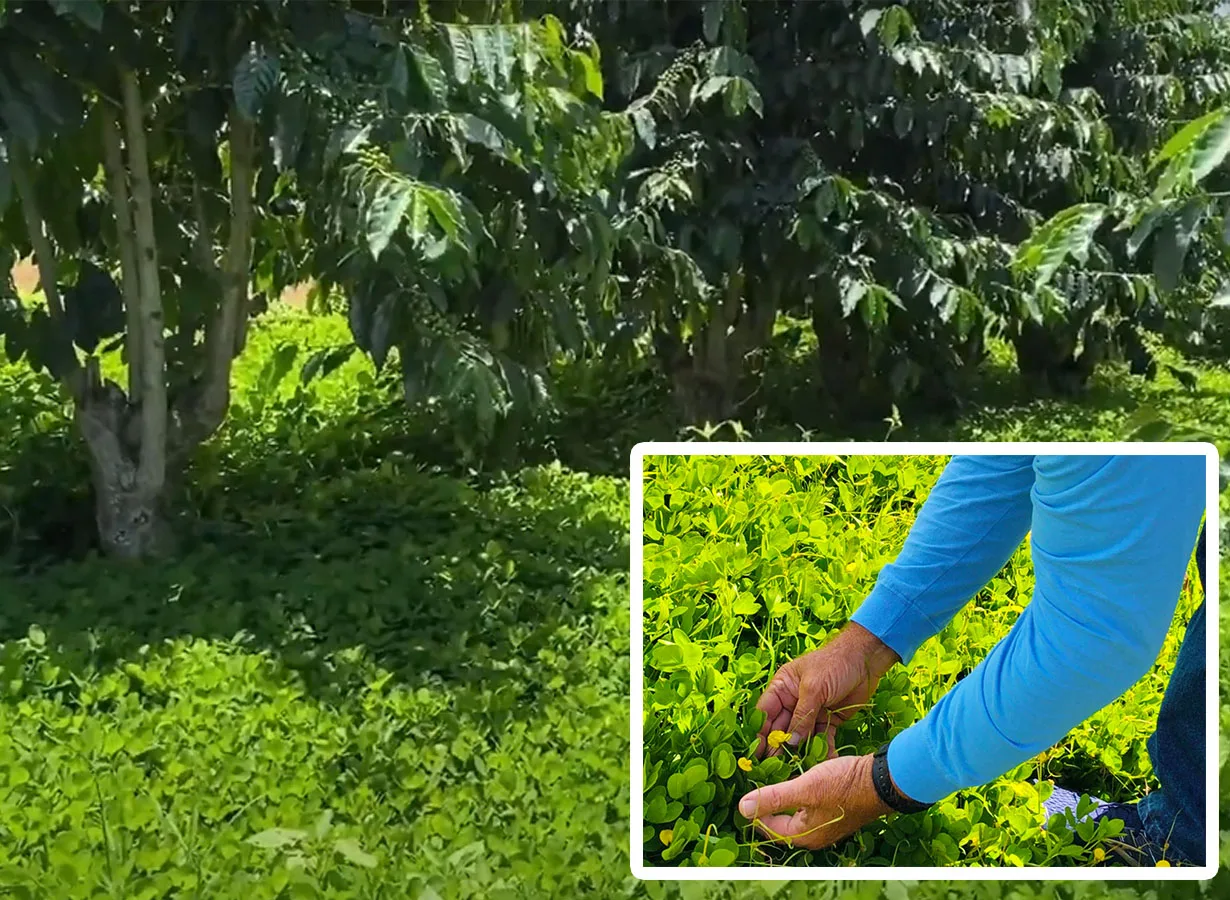
What is the semi-washed process?
The semi-washed process leaves the sticky fruit pulp on the bean so its natural sweetness and aroma soak in.
It takes more work than the washed process, which rinses everything away, but the sticky layer (mucilage) is full of natural sweetness and aroma.
Updated
Five steps to a cup
Hand-pick the cherries
We hand-pick only the red, ripe coffee cherries, from morning until around 4 p.m. Hawaii Island has one harvest a year: full swing until December, continuing into early February.
Wet mill: pulp and wash
That same evening we wash the red cherries, remove the skin by machine, and wash the beans in a high-pressure drum washer. Finishing the beans in the semi-washed style takes a washing technique of our own.
Dry mill: dry under the Hawaiian sun
We spread out the washed beans and dry them in the sun (sun-drying). Turning the beans every day, they dry in 4 to 5 days if the weather stays clear. This step is all done by hand.
Rest, hull and roast
The dried beans are not roasted right away; they rest for at least one month. Removing the husk, called parchment, leaves green coffee, which becomes coffee after roasting.
Sort: Peaberry and Extra Fancy
The rare round beans are Peaberry (No1 Grade); the top grade of flat beans is Extra Fancy (No2 Grade).
How does the semi-washed process differ from the washed process?
| Item | Semi-washed process (John's farm) | Washed process (common) |
|---|---|---|
| Sticky fruit pulp (the thin, sweet mucilage layer) | Left on the bean on purpose | Rinsed away completely |
| Work | More (our own washing technique) | Less |
| Effect on taste | Natural sweetness and aroma soak into the bean | The sweetness of the mucilage does not remain |
The one difference is whether the thin, sweet mucilage layer is kept or rinsed away. Sources: the article “About milling (coffee processing)” and the comparison photos on our Commitment page.
The difference you can see on the bean: the thin, sweet mucilage layer
Semi-washed beans keep a thin, sweet mucilage layer; washed beans do not. This layer is full of natural sweetness and aroma.

What is milling?
Milling means processing, and it happens in two stages: the wet mill and the dry mill. Only after the harvested coffee cherries go through these steps do they take the form of the coffee beans we know.
The skin of the cherry is tough and fibrous, and the bean inside is coated with a slippery, sweet substance (mucilage), like the pit of an actual cherry. The wet mill removes the skin and washes the beans; the dry mill dries them. Rather than simply driving off the moisture by machine, we leave it to the sun, which sterilizes with ultraviolet light and draws out the natural flavor.
Two grades: Peaberry and Extra Fancy
| Grade | Bean shape | Characteristics | Name in the online shop |
|---|---|---|---|
| Peaberry | Round | A rare bean: the seed that normally splits into two grows as a single bean | No1 Grade (Peaberry) |
| Extra Fancy | Flat bean | The top grade of flat beans. We select large, thick beans | No2 Grade (Extra Fancy) |
A coffee cherry normally holds two seeds. A peaberry is a cherry in which only one grew, and flat beans make up more than 95 percent of the harvest (from the article “Lots of twins? A Ka’u legend”). Both grades are single-origin, 100% Ka’u coffee.
About eight months of harvest, and no Sundays for John
During the roughly eight months of the harvest season, John has no Sundays. Picking coffee cherries from morning until evening, running the wet mill from the evening, and setting up the dry mill to wait for the next day’s sun: all of it finishes at around 8 p.m. Hawaiian summer stays light until about 7:30 p.m., but by the time John finishes the day’s work it is pitch dark.
2020 was “the best harvest in the farm’s history,” with “beans in very good condition” (from a December 2020 article).


Frequently Asked Questions
What do "No1 grade" and "No2 grade" mean?
What is the difference between Peaberry and Extra Fancy?
Taste hand-crafted Ka'u coffee
Key Points on This Page
- Five steps lead to a cup: hand-picking (morning to around 4 p.m.), the wet mill (pulping and washing), sun-drying (4 to 5 days in clear weather), resting (at least one month), hulling and roasting, then sorting.
- The semi-washed process keeps the thin, sweet mucilage layer around the bean on purpose; the only difference from the washed process is whether this layer is kept.
- Peaberry is No1 Grade (a rare bean that grows round as a single seed); Extra Fancy is No2 Grade (the top grade of flat beans). Both are 100% Ka’u coffee.
Related articles (in Japanese)
English versions of our blog are planned for a later phase. The articles below are in Japanese.
- About milling (coffee processing) (Japanese)
- The long-awaited harvest season is here! (Japanese)
- Coffee beans are actually seeds! Coffee bean basics (Japanese)
- Lots of twins? A Ka’u legend (Japanese)
- The best harvest in the farm’s history! (Japanese)