


What is the difference between Ka'u coffee and Kona coffee?
Ka’u coffee and Kona coffee differ because the two districts of Hawaii Island have different soil and climate.
This page compares region, soil, climate, taste and history. It does not compare figures such as elevation, price or production volume, because our source pages do not give them.
Updated
So what is different, Ka'u or Kona?
The difference is not in the trees but in the land, the soil and the climate. In 1989, hoping for the same taste as Kona coffee, John brought coffee trees from the Kona district and planted them in Ka’u. But because the soil and climate are different, the coffee turned out completely different from coffee grown in Kona, and tasted better than anyone expected.
Ka'u district versus Kona district
| Item | Ka'u district (Ka'u coffee) | Kona district (Kona coffee) |
|---|---|---|
| Location | Southeastern side of Hawaii Island (near the southern tip), south of Kilauea | West coast of Hawaii Island (see the map below) |
| Soil | Sits on a vast lava plateau; one of the few places blessed with good soil. Fine, loose soil built up in layers | Poor soil. Coarse soil, like crushed lava |
| Climate | Moderate rainfall and steady breezes | Relatively dry. Hot and dry climate |
| Coffee history | Former sugarcane land (late 1800s to 1996). In 1989 John built the first commercial coffee fields | Coffee farming was already thriving in 1989, with many coffee farms |
| Taste | Rich aroma, refined fruitiness and sweetness with little bitterness, moderate acidity, soft body | Not rated on this site (completely different from Ka'u) |
| Recognition in Japan | Low. A rare coffee hardly distributed in Japan | So famous that Hawaiian coffee usually means Kona |
| Origin of the trees | Trees John brought from the Kona district | - |
The descriptions of Kona’s soil, climate and harvests are what John saw in 1989, as written on our Feature page and its comparison chart.
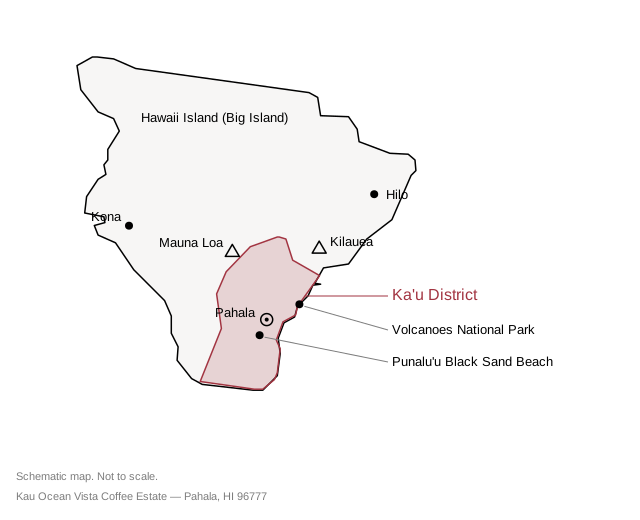
Ka'u and Kona on the map
Kona is on the west coast of Hawaii Island (the Big Island), and the Ka’u district is in the south of the island, south of Kilauea. Heading south from Kilauea, the source of the eruptions, you reach the Ka’u district in less than 30 minutes. Reaching Ka’u takes a long drive from either Kona Airport or Hilo Airport. The map is not to scale.
Soil and climate compared
The soil of the Ka’u district is fine and loose, built up in layers. The soil of the Kona district is coarse, like crushed lava. The climate differs too: Ka’u has moderate rainfall and steady breezes, while Kona is hot and dry. These two differences produce a completely different taste from the same trees.
John also advises farms in the Kona district
John, known as the “coffee doctor,” gives advice not only in the Ka’u district but to farms in the Kona district as well. He shares the experience and knowledge he has with other farms, helping raise the quality of coffee across Ka’u.
Which one to choose
If you are looking for the classic taste people mean by “Hawaiian coffee is Kona,” choose Kona coffee. If you want a coffee with refined sweetness and little bitterness, a soft body and a fruity aroma, and a rare Hawaiian coffee that is hardly distributed in Japan, we recommend Ka’u coffee.
Our Ka’u coffee was certified in October 2020 under the Hawaii Seal of Quality, the quality certification program of the Hawaii Department of Agriculture (Hawaii Seal of Quality).


Frequently Asked Questions
How is it different from Kona coffee?
What is Ka'u coffee?
Where can I buy it?
Taste the difference from Kona for yourself
Key Points on This Page
- The difference between Ka’u coffee and Kona coffee is the land, not the trees. When John planted Kona trees in Ka’u in 1989, the coffee turned out completely different from Kona.
- The Ka’u district has fine, loose soil built up in layers, moderate rainfall and steady breezes. The Kona district has coarse soil like crushed lava and a hot, dry climate.
- Ka’u coffee has a rich aroma, refined sweetness with little bitterness and a soft body, and is a rare coffee hardly distributed in Japan.
Related articles (in Japanese)
English versions of our blog are planned for a later phase. The articles below are in Japanese.